Pink Salmon
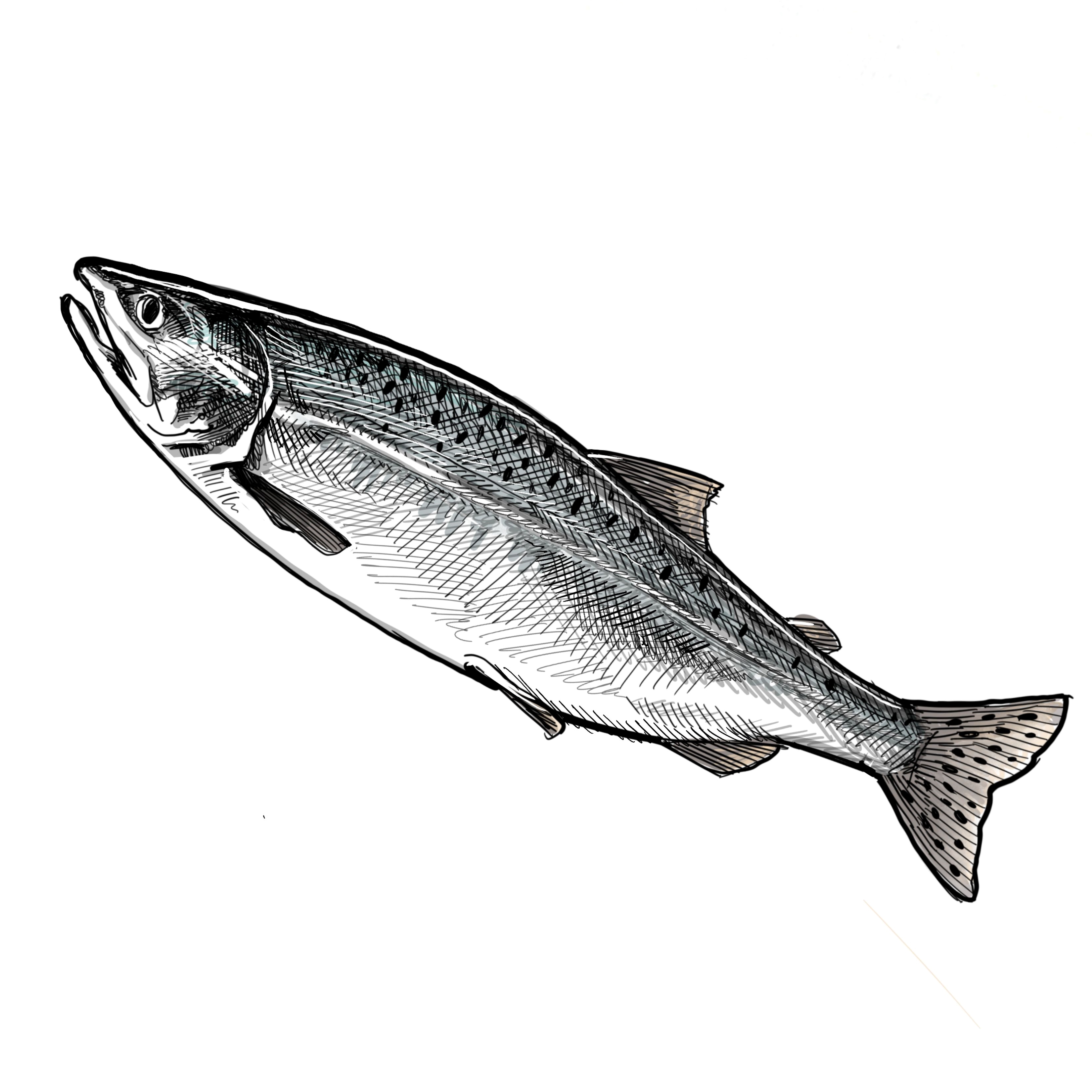
Pink salmon, also referred to as humpies, occupy a vast range in the North Pacific Ocean, Arctic Ocean and nearby seas. They are most abundant in Washington's Puget Sound. Unlike other Pacific salmon, young pink salmon directly migrate from freshwater to estuarine and marine waters soon after they are born. The smallest of the Pacific salmon species, pink salmon typically grow to between 20 and 25 inches in length and weigh three and a half to five pounds. Pink salmon are blue-green with silver sides and have dark oval spots along their backs and tail fins. As adults reach around two years of age, they return to their natal streams to spawn. When they return to spawning grounds, males develop large back humps and a reddish-brown coloration. Oceanic adults feed on small crustaceans, zooplankton, squid and smaller fish. Common predators include marine mammals, birds, larger fish and sharks.
Pacific salmon species occupy a unique niche in both ecological and cultural landscapes. Indigenous nations along the West Coast historically subsisted on salmon, and some present-day Indigenous peoples celebrate the significance of the species in First Salmon ceremonies. Chum salmon remains an economically and culturally important resource for West Coast Indigenous nations.
Overall availability
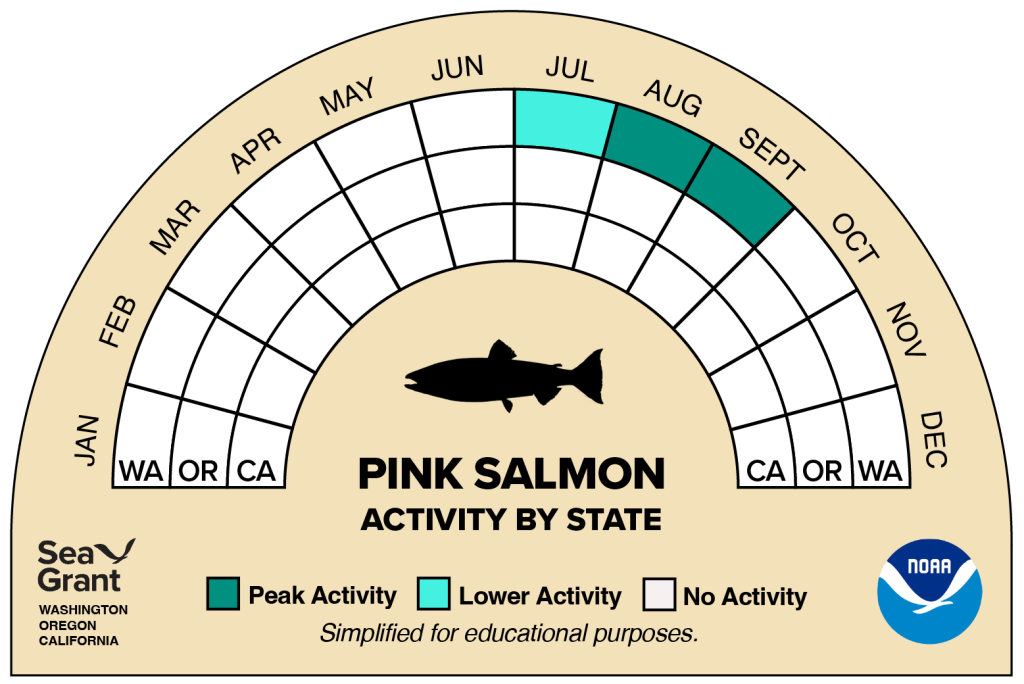
Pink salmon is fished in Oregon and Washington. It is available fresh seasonally in odd-numbered years, with the peak harvest occurring in late summer through early fall. It is available year-round canned, smoked, or frozen. Caviar can also be made from salmon roe.
Management
Pink salmon are fished in Washington using gillnet, purse seine and reefnet gear, and in Oregon using troll gear. Management of salmon fisheries is highly cooperative between NOAA Fisheries, The Pacific Fishery Management Council, Pacific Salmon Commission, and state Departments of Fish and Wildlife (WA, OR).